


Best districts of Tbilisi on the map and where to rent an apartment in Tbilisi?

Viktoria Zakirova
04.12.2021 · 1 min 0 comments
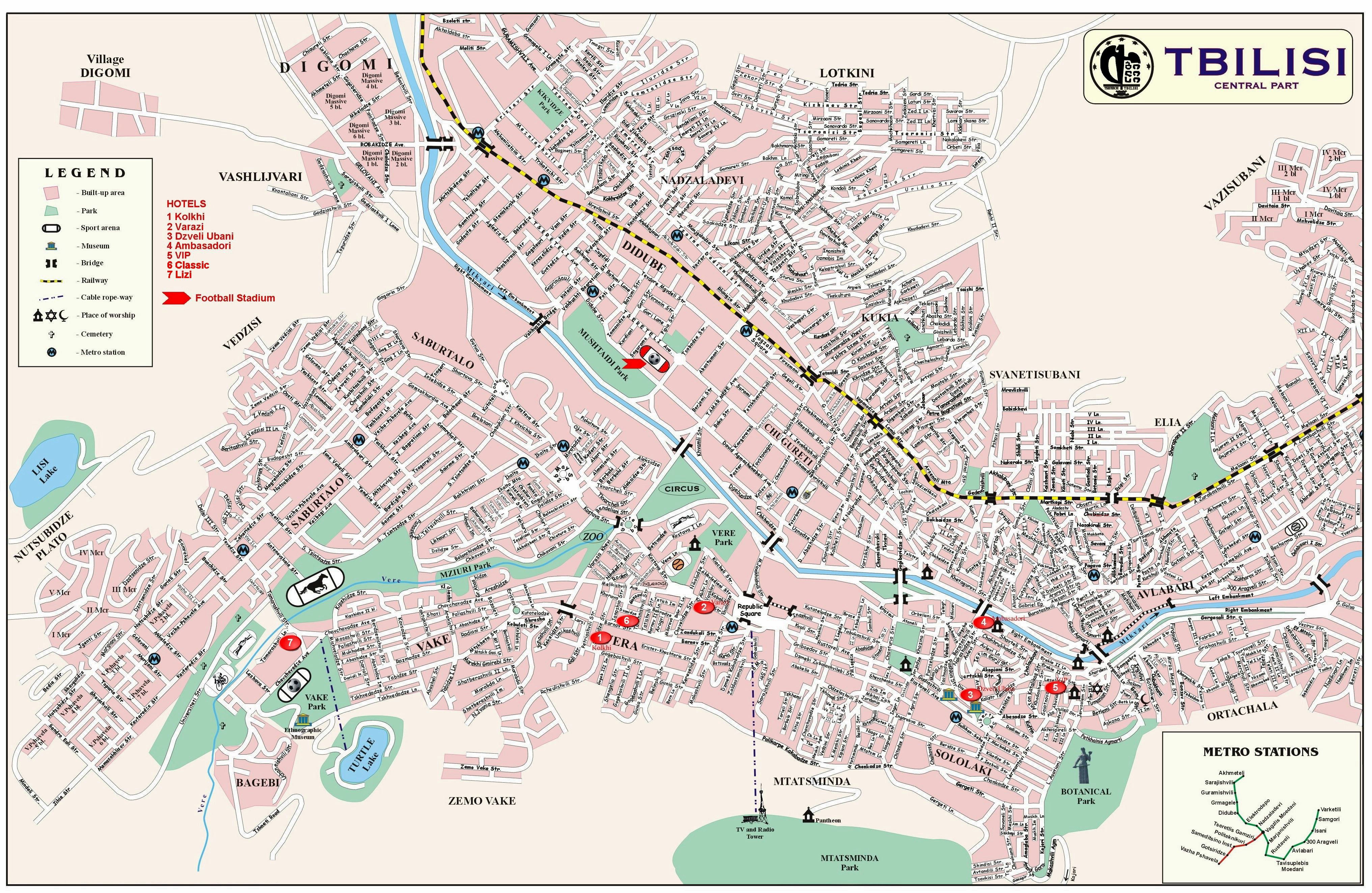
Districts of Tbilisi: where to rent a house or an apartment?
The question of where to rent an apartment or a house in Tbilisi arises for every tourist or expat who has decided to stay in the city for longer than a week. As in any city, each district of the capital has its own characteristics, pros and cons, which we will describe in this article.
Tbilisi on the map
Tbilisi - the capital of Georgia is located in Eastern Georgia, in a basin. The city is surrounded by the Trialeti, Saguram ranges and the Iora highlands. Tbilisi stretches along the Kura River. The population is slightly more than a million people, the area is 720 sq.km.
The climate is temperate continental, dry, and warm in comparison with other cities at the same latitude due to the proximity of warm seas and the Greater Caucasus Range. In summer it is hot, in winter it is cool, but the temperature very rarely reaches “zero”.
The windiest months are February and March and rainy months are April and May, the warmest are from May to October.
More than a third of Georgia's population lives in Tbilisi. Expats and tourists add "weight": thanks to the loyal visa regime, many visitors decide to stay here for longer than a couple of weeks. Since the infrastructure of the city is well developed, there are always a lot of people on the streets in the districts of Tbilisi.
In normal, non-"pandemic" times, there are no questions about where to go and what to do, no matter where you live. After all, the area of Tbilisi is small, and if you live near the subway, you can get from one end of the city to the other in 35-40 minutes.
Districts of Tbilisi
Conditionally, all districts of Tbilisi can be divided into four categories:
Center: Sololaki, Mtatsminda, Avlabari, Chugureti, Vake, Vera.
Saburtalo: (a separate branch of the Tbilisi metro).
Dormitory districts of Tbilisi: Gldani, ZGVIS (Temka) and Mukhiani, Nadzaladevi, Digomi and Vashlijvari, Isani, Samgorsky district, Krtsanisi.
Remote areas: Didi Digomi, Africa, Airport.
In each case, there are also popular neighborhoods, which we will also talk about.
Center of Tbilisi
Old Tbilisi: Sololaki
Sololaki is a district of Tbilisi, which is most often chosen by tourists. Low-rise buildings, many historical buildings, narrow streets with colorful houses, historical sites, small cafes - all this creates a special atmosphere that you want to enjoy.
Nearest metro stations: Freedom Square, Avlabari.
Pros:
The fact that this is an old city speaks for itself. It is pleasant to walk here, meet friends, enjoy the atmosphere of historical buildings and beautiful views.
You can find very inexpensive offers, especially if you do not claim a spacious apartment and agree to a modest cozy "studio".
In addition to the oldest city nearby Mtatsminda and the Botanical Garden, city buses run from Freedom Square to Kojori. Therefore, there will be no problems with places for walking in nature.
Minuses:
Lack of a full-fledged infrastructure for life: apart from Carrefour, there are no large supermarkets near Svoboda Square. Fruits and vegetables on local stalls are more expensive than in the residential areas of Tbilisi. To buy farm products at normal prices and have a choice, you have to go to the Samgori market or the Deserter / Borjomi market.
Old housing stock, which affects the quality of communications and the general condition of the house. In addition, the first floor in such buildings is often at ground level, so get ready for the fact that anyone can look into your windows. Although there are options in small houses in a closed fenced area.
It is also worth considering that Tbilisi is a tourist city and most travelers will definitely visit the old city. So the streets are always crowded, day and night.
Apartment size. Often the area of the proposed premises is quite modest, sometimes there are offers without windows or with tiny windows under the ceiling.
It is worth mentioning separately the "Italian" courtyards, which are often found in the areas of old Tbilisi. Renting there is cheaper, and at first glance the atmosphere is more comfortable and “homely”. In fact, be prepared for the lack of soundproofing: there is practically no personal space in such a house, you can perfectly hear what is happening in the yard and in the neighbors' apartments (respectively, they hear you too).
Mtatsminda
The central and highest mountain within Tbilisi rises to 740 meters above sea level. There is a park of the same name, to which buses and a funicular run. The area includes not only the mountain, but the entire Rustaveli Avenue, as well as the streets to the river.
Nearest metro stations: Svobody square, Rustaveli.
Pros:
Diverse housing stock. You can find options both in old low-rise buildings and in new buildings upstairs, or rent a room / floor in a private house.
The possibility of choosing a place depending on your preferences: closer to the avenue – for lovers of noisy "night" and tourist life, for lovers of silence – areas closer to the top of the mountain. You can choose an intermediate option: even five minutes up from the avenue, you can rent an apartment in Tbilisi, where there will be absolute silence at night.
The closer to the top – the less gas pollution of the air. The ideal option in this regard is directly at the top of Mtatsminda, in the park area. But this is an option for those who are either ready to constantly ride the bus, or for owners of their own cars.
Opportunities for walking. Along the avenue there are several spacious green squares, for lovers of longer trekking – Mtatsminda itself, from where you can go both to Turtle Lake and to the Botanical Garden. And, of course, old Tbilisi itself, which is always interesting to walk around.
Entertainment infrastructure. There are theaters, museums, art galleries, many boutiques, restaurants and cafes in the area.
Minuses:
From large supermarkets – very expensive Smart and more distant Carrefour. Otherwise, there are small shops and local outlets with fruits/vegetables/cheeses. Prices in general are higher than in "sleeping bags" and on the market.
There is a large height difference, which is especially tiring in the summer heat when you return home with groceries. On the other hand, you can drive up by bus or perceive the climb as an excellent workout after eating khachapuri and khinkali.
If you choose housing near Rustaveli Avenue, there is a strong gas pollution of the air, a lot of dust and exhaust from transport. This is especially felt in the summer, when, in addition to the heat and a complete absence of rain.
Avlabari
The Avlabari district of Tbilisi can also be attributed to the old city. But most of the houses of pre-revolutionary construction are in a half-destroyed state, the state is not in a hurry to reconstruct, preferring in this regard a more tourist Sololaki. This area of Tbilisi occupies very little space on the map, on the one hand it passes into Chugureti, on the other – into Isani, on the third (across the river) – into Sololaki.
Nearest subway stations: Avlabari.
Positive:
Proximity to the center and metro. A short walk and you are already in Riki Park, from which you can take a cable car to the Botanical Garden or walk to it on foot. Here is the original bridge of the World, crossing which you get to Sololaki. A walk in the other direction will lead to the Marjanishvili subway station and the no less tourist Agmashenebeli Avenue in the Chugureti district of Tbilisi.
The relative proximity to the many clinics that are located at the next metro station is 300 Aragvinets. A large grocery and clothing market, as well as the departure point of intercity mini buses – in three metro stations (Samgori).
Variety of housing stock. In addition to the old houses, there are many new buildings, as well as Soviet buildings.
Silence. Despite its central location, Avlabari is not the most popular area of the city among visitors, perhaps due to the lack of a developed tourist infrastructure in the depths of the area and the general condition of the buildings. Therefore, you can count on the absence of an endless stream of cars, if you do not live on Tsamebuli Avenue itself, and noisy companies.
Minuses:
The sad state of the old part of the district. Even if you live in a whole renovated house or a private cottage, walking around Avlabari, rather, brings sadness because of half-collapsed houses, in some of which people still live from hopelessness.
Entertainment infrastructure is poorly developed. Cafes, shops – only closer to the metro, the rest of the area – densely built-up low-rise houses or private cottages. More establishments – after Baratashvili and Tsamebuli Avenues and before the river. The nearest large supermarket is Carrefour near Svobody Square.
There is not enough clean fresh air, in summer it is especially hot and stuffy in comparison with remote and more green areas.
Chugureti
Chugureti is another popular tourist area of old Tbilisi. Although to call it "old" is too categorical: the central avenue of Agmashenebeli looks very presentable, almost all buildings have been restored. But more deeply, in the courtyards there are many old colorful houses with carved doors and decorations.
The nearest metro stations are: Marjanishvili, Vokzalnaya Square, Tsereteli.
Positive:
Developed infrastructure. This area really has everything: markets, numerous inexpensive shops, restaurants and cafes for every taste, schools and kindergartens, sports clubs. There are several small parks and green squares.
Center. In walking distance – Rustaveli Avenue, Vere and Vake districts. There are no problems with transport.
Diverse housing stock. Depending on the location and budget, you can choose accommodation for every taste and budget.
Minuses:
A huge amount of transport. This area is constantly overloaded with cars, so if you decide to settle close to the avenue, you can not count on silence.
Chugureti is a district of Tbilisi, located in the lowlands. This means that in summer it gets especially hot, dusty and stuffy here.
Vake
The Vake district in Tbilisi is perhaps the most expensive after Vera (or on a par with it), but at the same time, one of the greenest, most prepared for tourists and pleasant for walking. It smoothly passes into Saburtalo and Bagebi.
Nearest metro stations: none.
Pros:
Diverse housing stock. There are many Soviet buildings and new buildings in Vake. It is was always considered a good and expensive area. Prices, respectively, will be higher than even in Sololaki, but the choice of apartments is large and, in general, the area looks more well-groomed.
Well developed infrastructure. The area has everything you need for life: supermarkets and small grocery stores, sports clubs, cafes and restaurants, schools and kindergartens, clinics, entertainment venues. The central place for recreation is the spacious Vake Park, from which you can climb to the Turtle Lake, and from there - go to Mtatsminda or Kojori.
Nice place for walking. The Vake district in Tbilisi is one of the greenest parts of the city, which makes it pleasant to walk here, even if you don’t go into the park.
Transport connection. Many buses and mini buses that connect the area with all parts of the city. Recently, separate lanes have been made for public transport on Chavchavadze Avenue, thanks to which it has become faster to travel by bus or minibus than by your own car.
Minuses:
No subway nearby. The nearest stations are Rustaveli or Delisi. Both there and there you need to go at least 30 minutes, depending on the location.
High prices for fruits, vegetables, dairy products at local stalls. To buy something at a more adequate price, you have to go to the market. Prices in the local cafes are also sometimes higher than in the Mtatsminda area.
A huge number of vehicles and people, as a result - noise and gas pollution. Therefore, if you want to live away from noise, dust and fuss, it is better to choose an apartment away from Chavchavadze Avenue and Abashidze Street.
There is a strong elevation difference, so you will have to “pay” for silence and remoteness from the central avenue with tiring walks.
Vera
The Vera district in Tbilisi, on the one hand, is a continuation of Vake, on the other, Mtatsminda. This part of the city is small, but very pleasant and comfortable, although expensive in terms of living and rent.
Nearest metro stations: Rustaveli.
Pros:
Developed infrastructure. Entertainment, cafes, restaurants, schools, sports sections - everything is at hand. Good transport interchange, Rustaveli metro station - 10-15 minutes on foot.
A diverse housing stock: you can rent an apartment both in an old low-rise building of a pre-revolutionary building, and in a new building.
Places for walking. In the area itself there is a small Vera park, in the immediate vicinity - Vake park, Turtle Lake, Mtatsminda.
Minuses:
High prices for everything. There are no large supermarkets in the area, you will have to go to the nearest Carrefour either in Vake or on Svoboda square. The cost of vegetables / fruits on local stalls is much higher than in the market or in "sleeping areas.".
Noisy and dusty if you live closer to the avenue and the epicenter of tourist and entertainment life. But if you choose the upper part of Vera, you will enjoy the silence and views of the green areas and Mtatsminda. The same nuance is in terms of the quality of the housing stock: closer to the center of the district - old low-rise buildings, to the top - new buildings. Therefore, there are plenty to choose from.
Height difference. If you choose an apartment in the upper part of the district, be prepared for the fact that you have to climb the hill.
Saburtalo
The Saburtalo district in Tbilisi should be taken out as a separate point, since it is a separate part of the city with its own “green” metro line and well-developed infrastructure. We can say that this is almost a separate city, living in which there is rarely a need to travel to the center, since everything you need is nearby.
Metro stations: Technical University, Medical University, Delisi, Vazha-Pshavela, State University.
Pros:
Well-groomed. The area looks very neat, especially if you focus on the central streets. Previously, most of the intelligentsia lived in Saburtalo, because this part of the city is considered safer, and because of the higher and more isolated location, the air here is cleaner than in the center.
Developed infrastructure. Saburtalo has absolutely everything you need for life, especially closer to Pekini Avenue. Several large supermarkets, many cafes, boutiques, gyms and clinics, local shops, schools and kindergartens. Five metro stations, many buses and minibusses.
Diverse housing stock. There are houses of both Soviet construction and a new building. You can choose a cheaper option, but away from the main streets, or more expensive, but closer to the epicenter of city life.
Minuses:
Prices are quite high, higher than in many areas of the city, distant from the center. This applies to both the cost of products on street stalls, as well as cafes, sports clubs, rent / purchase of housing. It is impossible to designate any specific price tag for the entire Saburtalo district - the rates will vary depending on the microdistrict. But in general, they are almost the same or even higher than in the central districts of Tbilisi.
Constant traffic jams, stuffy, a lot of people. Living near the central avenue, you can not count on silence. The two central streets - Vazha-Pshavely and Kazbegi - are not wide at all and are constantly clogged with traffic, so walking in silence to the sound of birds singing is an almost impossible task. Unless, somewhere deep in the yards. And because of the presence of three universities, in addition to locals and tourists, many visiting students live in the area.
A few "green" places. Of the locations where you can relax and unwind in the Saburtalo district in Tbilisi, there is only a small Godziashvili park and an alley at the end of the avenue, between the metro stations Vazha-Pshavela and the State University. At the end of the district there is an exit to the green hills, through which you can reach Lake Lisi, the Nutsubidze plateau and the Bagebi area. There is also a new residential area Jikia. But it is worth considering the higher prices and travel time to the center, taking into account the transfer between the lines.
- Nutsubidze
Continuation of Saburtalo, but located a bit higher. The air is cleaner here, in summer it is not so hot and dusty, close to Lake Lisi and a green area. Other pluses are beautiful views of the city, a variety of housing stock (new buildings, private houses, Soviet buildings), in new complexes - the presence of a spacious equipped adjacent territory, which is rare in central and densely populated areas.
The main disadvantage is the distance from the center. From transport - buses and minibuses. The nearest metro station is the State University, from which, if you walk, it is at a rather large angle. The infrastructure is not very developed - in other residential areas of Tbilisi such as Gldani, the number of shops, cafes and service establishments is much larger.
The Nutsubidze plateau is ideal for those who have their own car or who want to live away from the noisy center, close to nature.
- Bagebi
The district of Tbilisi, which comes out of Vake on one side, and Saburtalo on the other. It is located on a hill so the air here is cleaner, and in summer it is much fresher than in the center. There is no metro nearby - only buses. It is impossible to call this area green, however, there are many squares and small natural locations.
As in Nutsubidze, the adjacent territory of many new buildings is well-groomed, with space for recreation and children. The infrastructure is well developed, but the prices are not low.
People who want more silence and good ecology rent housing in Tskneti, a village with private villas, which is already considered a suburb of Tbilisi. But this option is for owners of a personal car (direct route from Bagebi) and those who are satisfied with a relatively high price. After all, the cost of rent in Tskneti is often higher than in the center of Tbilisi.
Dormitory areas of Tbilisi
Gldani
The Gldani district in Tbilisi is called by many "a city within a city". And indeed: when you come here, you catch yourself feeling like you are in a separate micro-town, with its own full-fledged infrastructure and bustling life.
Nearest metro stations: Akhmeteli Theatre.
Positive:
There is absolutely everything you need for life: supermarkets, shopping centers, cafes, markets, numerous shops, fast food, schools, pharmacies, kindergartens, etc.
Transport accessibility. Even though the Akhmeteli Theater is the last metro station of the red line, it takes 25-30 minutes to get to the center. The situation is simplified if you have your own car: traffic jams here are not as long as, for example, in Saburtalo or Vaka, and along the highway along the Tbilisi Sea you can quickly get to another part of the city – Varketili and the airport.
The proximity of the Tbilisi Sea, and to the ennobled part of it, unlike Varketili. You can walk or take a bus – depending on the specific location. In the district itself there are many small green squares, playgrounds, regardless of the specific neighborhood.
Affordable prices for housing, food. At the same time, there is a large selection of apartments both in new buildings and in Soviet-era houses.
Minuses:
There are a lot of people and transport. This is especially noticeable if you settle as close as possible to the metro and the adjacent infrastructure. If you choose a house a little further away, there will be silence and clean air, but less public transport.
Prices are higher than in other residential areas of the city. But, nevertheless, it is more accessible than in the center.
The city center is not within walking distance. Walking even to the nearest metro station is problematic – pedestrian paths along many sections of the roadway are not provided. Therefore, to walk – only within the district, otherwise – to move by transport.
ZGVIS (Temka), Muhiani
Although both districts do not belong to Gldani, they are almost adjacent to it. Temka begins after Nadzeladevi, flows smoothly into Muhiani. In both cases, there is a variety of buildings: private sector, Soviet houses, new buildings, because an apartment can be found good and inexpensive, for every taste.
From this list, Mukhiani is the area of Tbilisi that is closest to the metro: the Akhmeteli Theater is a 5-15 minute walk away, depending on the location. Temka is closer to Sarajishvili station, the distance depends on the location. Anyway, there are buses and minibuses in both districts, it's a matter of a few minutes to get to the metro.
The advantages of both districts are clean air, the absence of constant noise, low prices and at the same time – proximity to the more developed Gldani, the Tbilisi Sea – within a 10–minute walk, good transport accessibility, especially if you have a car. But mostly locals live here, it's not worth counting on the service sector, as in the center. You will have to go to Gldani for shopping and other needs.
Nadzeladevi
It starts from the Station Square and ends in front of the Temka (ZGVIS). It includes the Didube microdistrict and Nakhalovka. The Nadzeladevi district is not a tourist area, but it is developed and densely populated. There is constant movement, a large selection of apartments, low prices.
Metro stations: Tsereteli, Nadzaladevi, Gotsiridze, Didube, Grmagele, Guramishvili.
Positive:
There is everything you need for life: numerous outlets with vegetables and fruits, local "milk" and other products; supermarkets, pharmacies, bakeries, hardware stores, auto repair shops in especially large numbers.
There are no large parks in the area, but there are a lot of green small squares, Kikvidze Park and the Tbilisi Sea, which can sometimes be reached on foot – depends on where to rent an apartment in Tbilisi.
Various buildings. You can find both a private house and an apartment in a panel "Soviet" house or a new building. Prices are much more reasonable than in the center, especially closer to Gldani.
Transport accessibility. In addition to the metro, there are many buses and minibuses.
Minuses:
Despite the developed infrastructure, there are almost no cafes and restaurants. And if there is something similar on Tsereteli Avenue, then in Nakhalovka and the further part of Nadzeladevi, up to Gldani, there are only bakeries and small pastry shops.
Crowded, lots of cars and transport in general. In the evenings, the central streets and avenues are in traffic jams, although they cannot be compared with what is happening in Saburtalo and Vaka. The air is not the cleanest, but it is better than in the central areas located in the lowlands (Chugureti, part of Mtatsminda, Vera, Sololaki, Vake).
The closer to the Tbilisi Sea, the greater the climb. Though further away from noise, traffic and polluted air.
- Didube
It covers Tsereteli Avenue up to Didube metro station. Pros – two metro stations, Didube bus station, a market, numerous shops, bakeries, small cafes, supermarkets, a variety of buildings and a choice of apartments, proximity to the city center (you can walk) and the station square. The avenue itself is quite green, there are a couple of small squares for walking.
One of the disadvantages of the Tbilisi Didube district is noisy, there are a lot of cars and people all the time, there are not a lot of cafes and restaurants. Prices are higher than in the rest of Nadzaladevi.
- Nakhalovka
Nakhalovka district of Tbilisi is a local name, belongs to Nadzeladevi. It goes along Dadiani Street from the Railway Station Square and ends near the Saba Furniture Market, right after Kikvidze Park. The buildings are different: closer to the main street – high–rise buildings, if you go deeper - mostly low-rise and private houses.
There are two metro stations nearby, there is a lot of public transport, well–developed infrastructure, very reasonable prices for products on street stalls. This is not a tourist area, because you will not find many cafes and restaurants here. But in those that are, the prices are very pleasant.
It is also worth considering the steep ascents and descents. But if you rent an apartment higher than the central street, the air will be much cleaner, you can enjoy the green areas and silence.
Digomi
The big Digomi district in Tbilisi starts from Gelovani Avenue, captures Agmashenebeli Alley and Robakidze Avenue. If public transport and infrastructure are a priority, the latter is the best place to live here.
Visually, Robakidze Avenue resembles Tsereteli: wide, with a lot of trees, a lot of various establishments from the service sector, a spacious pedestrian part. During the Christmas period, beautiful garlands with lights are hung here. Living on Robakidze, you can easily reach or walk to the Didube metro station, and from there – to any part of Tbilisi or to other cities.
In the Digomi area there is a well–groomed Digomi Park, several green squares, along the central streets leading to the exit from the city there are many coffee and food outlets. At the end of the district is the Tbilisi Mall. One of the disadvantages is the lack of tourist infrastructure, a lot of transport and people.
Vashlijvari
The Vashlijvari district of Tbilisi is located along Gelovani Avenue, closely adjacent to Digomi, located on a hill. It consists of both private buildings and high-rise buildings. Among the advantages – fresh relatively clean air due to its location on a hill, silence, in general – a green area, the availability of transport links (buses).
Among the minuses – the remoteness of the metro, a large climb during the ascent, not very developed infrastructure. Life here will appeal to those who have their own car: in this case, you can get to everything you need very quickly
Krtsanisi
The Krtsanisi district, which is also called the Ortachala district, in Tbilisi is located some distance from the center. Adjacent to the Botanical Garden, located on a hill. It is one of the most environmentally friendly areas of the city – perhaps that is why almost all embassies of different countries are located here.
Positive:
Silence, clean air, proximity to nature (Botanical garden, surrounding hills).
A transport interchange with an exit towards Rustavi.
Almost completely new development.
Minuses:
There is no metro nearby, there is only one bus and minibus from public transport, it is quite far to the center if you walk.
The infrastructure is a completely residential area: there are necessary shops, a couple of cafes.
Prices are above the average in the city.
Krtsanisi is suitable for those who have their own car and a desire to live in silence, in the fresh air, while giving as much or even more for a rented apartment than in the center.
Isani
The Isani district in Tbilisi covers a small area from the Kakheti highway to the river and from the Samgori bus station to the metro station 300 Aragvintsev inclusive. This place is strikingly different from the neighboring Samgori and Varketili with greater grooming, a large number of new houses and the absence of endless street markets.
Metro stations: Isani, 300 Aragvintsev.
Positive:
Developed infrastructure. Shopping center, supermarkets, many shops, bakeries, street outlets with fruits and vegetables, clinics, schools, kindergartens.
Transport links. Two metro stations, a lot of buses and minibuses. One metro station to Samgori bus station, slightly in the other direction, but on the same branch – to Didube.
Proximity to the center. Avlabari is just around the corner, and from there it is easy to get anywhere: to Sololaki, Chugureti, Mtatsminda.
Low cost of living. Prices for apartments, groceries, household goods are much more acceptable than in the central districts or in Saburtalo.
Minuses:
Lack of parks. There are several small green squares in the Isani district, there are sports and playgrounds, a green area near the Olympic complex. But you will have to go to larger parks.
Lack of cafes, restaurants. There are fast food outlets, a couple of Georgian cuisine restaurants, several pastry shops and bakeries. But for European-type establishments, again, you will have to go to the center.
Dense population. There are a lot of people in the area, mainly due to the large number of clinics and hospitals near 300 Aragvin Residents, as well as due to dense development. Nevertheless, it is impossible to say that there are endless traffic jams and dirty air here. Although it is much more pleasant to breathe in areas located on high ground.
Samgorsky district in Tbilisi
It is very large, extending from Sani (although in theory Isani also refers to it) to the end of residential developments within the city. After that, only the Airport, Africa, Didi Lilo go separately.
- Samgori
It covers residential areas around the Samgori metro station up to the Kakheti highway and down to the river, as well as towards the end of the city. The area is always filled with people because of the bus station and the market, which covers both the passage inside the metro and the entire space above between the exits from the station.
One of the advantages is that the Samgori district in Tbilisi is very developed. It has everything you need for life, including clinics, schools, kindergartens. Low prices for groceries, clothes, shoes, apartments. Good transport links: a lot of buses, minibuses that go to all areas of the city, as well as to other cities and towns, to the Lilo market.
Of the minuses – it's noisy, there are always a lot of people and transport. Not the most pleasant area for walking, although if you go further from the central streets, you can meet ennobled green squares and enjoy the silence. But there are not enough spacious green parks, cafes and restaurants where you can sit and relax.
- Moskovsky Prospekt
This is not a separate district or even a microdistrict of the city, but they talk about it as a separate direction. It starts at the Samgori metro station and ends in the fourth quarter of the district.
Among the advantages – a lot of small green squares, playgrounds, very developed infrastructure, diverse buildings and more than reasonable prices. Now a spacious 3-hectare park is being built near Moskovsky Prospekt, so this area will be developed in the future.
Of the minuses – a lot of transport, the relative distance of the metro (depending on where exactly to live), noisy, not very clean air. If you live at the end of the avenue, housing prices will be noticeably lower, but it will be more difficult to get to the city, plus in addition to the atmosphere of a typical "sleeping bag", you should not wait for more.
- Varketili
It covers the Varketili metro station, adjacent neighborhoods and goes up to the Tbilisi Sea, up to the New City (Hualing). The Varketili district in Tbilisi is considered a resettlement area – there are many migrants from Pakistan and other eastern countries. There are also many Georgians, because the population density is "off the scale".
Metro station: Varketili.
Positive:
Developed infrastructure. If you take the metro area and Javakheti Street, there are many street outlets with food, clothing and any other goods. Several large shops, bakeries, snack bars, banks, hardware stores, a small shopping center right in the subway. There are several schools and kindergartens in the area.
If you rent an apartment in Tbilisi in the depths of the Varketili district, you can enjoy the silence, numerous playgrounds for children, small green squares.
Near the Tbilisi Sea, there is a spacious Hualing Park, with well-groomed walking paths and good lighting, and game areas.
Transport links. In addition to the metro, there are many buses and minibuses in the area.
Prices. It is lower than in most other districts of the city – both for apartments and for food, clothing, shoes.
Minuses:
Arriving in the Varketili district of Tbilisi, one gets the feeling that one gets to the market. This feeling begins immediately after leaving the subway in the passage and does not leave when walking in the neighborhood along the central street.
There are too many people and cars. It's not possible to take a quiet walk nearby – this area is in constant motion. If you take the central streets – a lot of dust, exhaust, noise.
The absence of cafes and restaurants of the "tourist" type. There are snack bars, small Georgian cafes, pastry shops, but there are very few of them.
There are no spacious parks. There are small green squares where a lot of people with children walk. To get to the park zone, you have to go either to the center or to Hualing. By the way, the latter is also not the top of perfection. The part of the Tbilisi Sea in Varketili is generally poorly ennobled, walking there from the metro or from Vazisubani is not the most pleasant walk. There are strong winds near the sea, the park itself is planted with young trees, therefore it looks more like a well-groomed wasteland. There is an Arboretum nearby, but its condition is depressing – the paths are broken, there is a lot of garbage, so it is not suitable for walking.
- Vazisubani
The village of Vazisubani goes to the left of Varketili and includes several microdistricts.
Among the advantages – a lot of new buildings, developing residential neighborhoods, there is an infrastructure for life in the form of small supermarkets, bakeries, hardware stores, several green squares, sports and playgrounds. The further away from Varketili – the quieter, more new buildings, greenery, grooming.
Of the minuses – the lack of metro nearby, only buses and minibuses. The village is located on a hill, so it is not so easy to get to it on foot. Previously, there was a cable car from Samgori directly to Vazisubani, but a few years ago it was closed due to an accident. The lighting on the streets is not always good, the pedestrian paths are "broken" and often crowded with cars, dusty, a lot of people and cars. Especially closer to the Varketili metro station, along Petepi Avenue.
Remote areas of Tbilisi
Didi Digomi
Didi Digomi district in Tbilisi (or Digomi village) is a continuation of Digomi district. We can say that it is a separate island inside Tbilisi, with its own internal infrastructure and life.
Positive:
Completely new development: either multi-apartment, but not very high houses, or private villas.
Quite a wealthy contingent: there are no crowds of immigrants from other poorer countries, as in Varketili, for example.
Silence, cleanliness, well-groomed area, fresh air. Especially if you live on the central streets.
There is everything you need: two supermarkets nearby, many small shops inside the area, cafes, service establishments, gyms and playgrounds.
Prices are lower than in many other districts of Tbilisi, especially if you compare the quality of apartments. The cost of products on street stalls is also lower.
Minuses:
Distance from the city. Choosing Didi Digomi for life, it is better to take care of buying a car right away. There is no metro nearby, there are buses and minibuses from public transport, the trip on which will take 35-50 minutes, depending on the time of day and traffic jams. To Tbilisi Mall – or a long bus ride with a transfer, or by taxi.
Lack of places to walk. The Didi Digomi district is literally an island in Tbilisi: around there are highways, transport interchanges and exit from the city. Therefore, you have to walk either along the inner streets, or go, for example, to the adjacent Mtskheta or the center.
Strong winds. Didi Digomi is considered to be the windiest area of Tbilisi.
Africa
Africa district in Tbilisi is located near the airport, it takes about 20 minutes to get to it by minibus from Varketili metro station. The area is quiet, calm, but the buildings are mostly old, the infrastructure is clearly not for a rich entertainment life, it's not quick to get to the city. But the prices are more than acceptable.
Air city
Adjacent to the Tbilisi Airport, it is a 15-minute minibus ride from the Samgori metro station. In comparison with Africa, the building is newer, lots of greenery, silence. Prices for rented housing are 1.5-2 times lower than in Tbilisi.
What are the best areas in Tbilisi for rental housing?
As elsewhere, it is impossible to name the best areas for living in Tbilisi – the choice depends entirely on the initial requests: budget, availability of your own car, children, pets, desire to live in silence in the fresh air or in the center of cultural and entertainment life, etc.
It is important to understand whether you need a metro in Tbilisi nearby and a developed infrastructure at hand, or are you ready to spend most of your time in remote but quiet areas, and if necessary, travel to more developed parts of the city.
As for security: there are no areas in Tbilisi that are considered particularly dangerous. Even if we talk about the areas of Gldani and Varketili, more remote Vazisubani or Africa, you will feel safe almost anywhere in the city. This does not negate the need to observe the basic rules of caution, but even if you return home late at night in any of the residential areas, the chance of stumbling into trouble is small.



Subscribe to our newsletter!
We'll send you the best of our blog just once a month.
We promise.
We'll send you the best of our blog just once a month. We promise.